Every product passes through here.
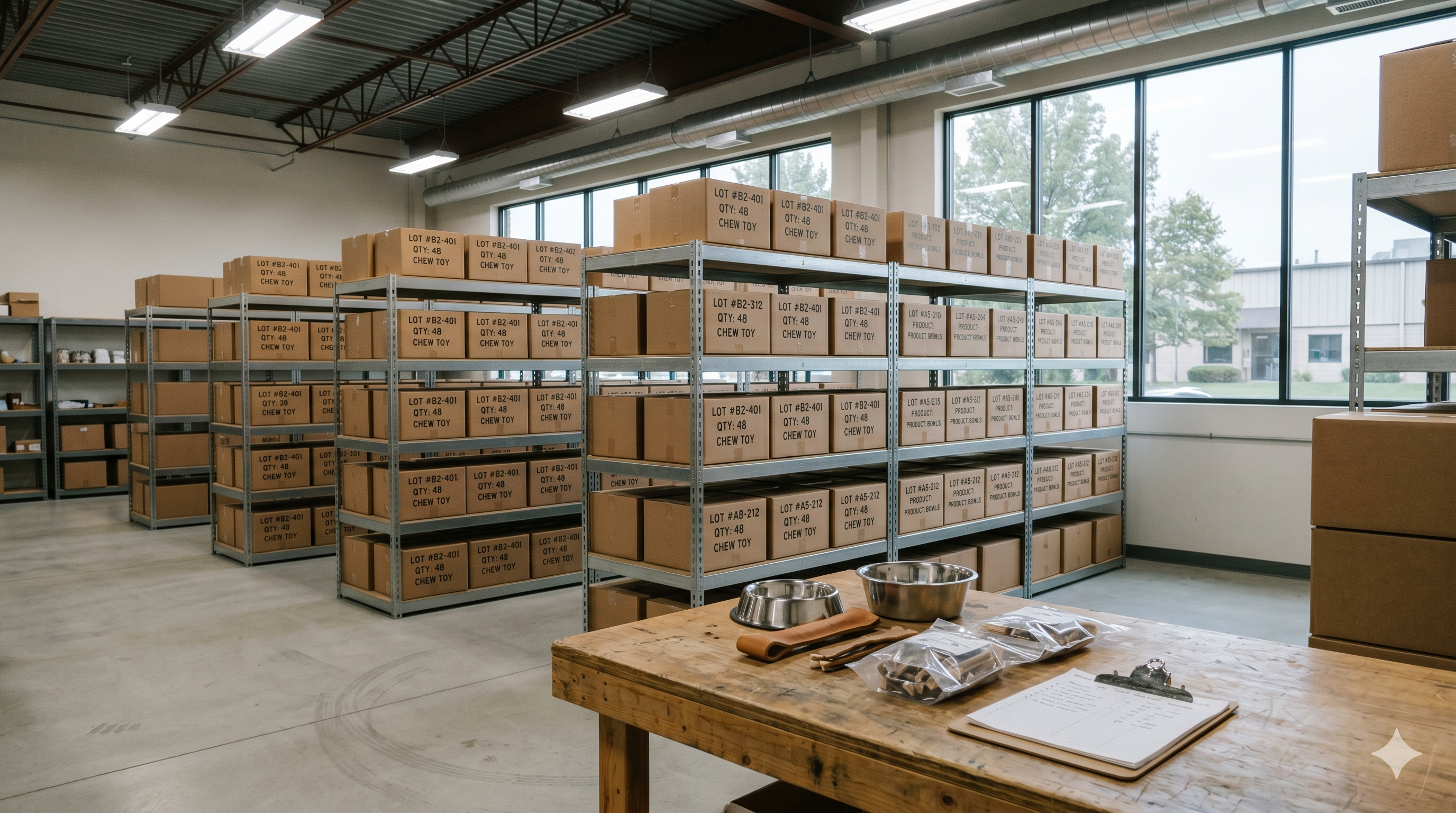
Wixom is twenty-five miles northwest of Detroit. Industrial park off I-96, between a frame shop and a roofer's supply. Most of the building is shelving — fourteen-foot units, three deep, holding cardboard boxes that came in by container ship from Karachi, Daklak, Kanpur, Lo Manthang. Each box has a lot number written in marker on three sides.
The first thing that happens to a shipment is it sits. Most fulfillment operations move boxes from the truck to the shelf to the customer in twenty-four hours. We hold incoming shipments for forty-eight to seventy-two hours in a quarantine zone — no exceptions. The point is to catch anything wrong before it goes anywhere.
Then a person opens every single box.
That's not a metaphor. We have three QC staff. Every box gets cut open, the contents pulled out and visually inspected — checked for moisture, mold, packaging damage, pest signs. Items get weighed against the shipping manifest. If the manifest says fifty pieces, we count fifty pieces. If we count forty-eight, the entire box gets flagged and a note goes to the supplier. We've returned shipments. Suppliers know.
After QC, the items go to the lot-numbered shelves. The lot number is the link back to the source. If a customer two months from now reports that a yak chew from Lot 28-247 had a soft spot, we can pull every other piece from that lot and inspect it. We can call Pemba and tell him which week's production had the issue. The trail doesn't break.
Packaging is its own room. Heat-sealed mylar bags with silica desiccant for the chews. Branded tissue paper for the toys. Recycled paper void fill — never plastic peanuts. Every order ships with a paper packing slip that has the lot numbers of every product inside, in case the customer wants to know.
The room isn't beautiful. It's fluorescent-lit, cold in winter, warm in summer. The concrete floor has an oil stain near the loading dock that's been there since we moved in. The shelving is industrial wire, the workbench is a folding table that's been folded a thousand times. We've been asked, more than once, why we don't get a nicer space. The answer is that the customer doesn't pay for the space. The customer pays for the products and the trust that comes with them.
What ends up on this floor is roughly two hundred and fifty active SKUs across nine product categories. Yak cheese from Mustang. Coffee wood from Daklak. Buffalo cuts from regional suppliers across South Asia. Leather toys from Kanpur. Stainless feeding equipment from a manufacturer in Pune. Non-skid mats from a silicone factory in Vietnam. Bully sticks from a North American single-ingredient processor we work with directly.
Each of those supply chains has its own quirks. Yak cheese arrives in 30-pound bulk bags and gets repacked into retail formats here — that's a four-hour process, and we wear gloves the entire time because nothing should touch the chew that came from a hand that just signed for a UPS delivery. Coffee wood arrives ready-to-ship and only needs visual inspection. Leather toys go through a smell test — vegetable-tanned leather has a particular musky-sweet note, and chemical-tanned leather smells like nothing. We've returned shipments that smelled like nothing.
The chapter we tell about Wixom isn't a craft chapter. We're not making anything here. The chapter is about what happens between the supplier and the customer — the part that almost no pet brand talks about because it's not romantic. It's the part where we open every box, count every piece, run a moisture check on every chew, and re-seal everything in our own packaging with our own lot numbers stamped on the outside.
If a customer ever has to send something back, the box that arrives at our warehouse goes to a separate room. It gets opened, inspected, photographed, and the lot number gets cross-referenced. Sometimes we find an issue we hadn't seen. Sometimes the customer's dog just didn't like it, and that's fine — we refund and move on. Either way, the loop closes here. Nothing we sell goes out the door without a path back.
The American chapter of every product we make ends in this building. The Himalayas are where the cheese is born. Daklak is where the coffee wood is cured. Kanpur is where the leather is stitched. Wixom is where it all gets checked. That's the catalog.
— PetYupp warehouse · Wixom, Michigan · QC and fulfillment staff of three · receiving hours 8 AM to 5 PM Monday through Friday